The Gold Standard for Large Orders
Screen printing is the traditional method where thick ink is pushed through a mesh stencil directly onto fabric. It’s the most durable and cost-effective option for large quantities — and the technique the industry has relied on for decades.
The Process
- Stencil — Your design is burned into a mesh screen coated with light-sensitive emulsion.
- Setup — Each color in the design requires its own screen and precise alignment on the press.
- Print — Thick ink is pulled across the screen with a rubber squeegee, forcing it through the mesh onto the garment.
- Cure — The garment moves through a high-heat conveyor dryer to permanently bond the ink to the fabric.
Why Choose Screen Printing
- Unmatched durability — Plastisol ink bonds deeply to fabric fibers and often outlasts the garment itself without cracking or fading.
- Vibrancy on dark fabrics — Because ink sits on top of the fabric rather than soaking in, colors pop brilliantly even on black or navy.
- Bulk savings — Setup takes time, but once running, the cost per piece drops significantly for large orders.
- Specialty inks — Screen printing enables textured, metallic, and other specialty effects that digital methods can’t replicate.
Modern Versatility for Any Fabric
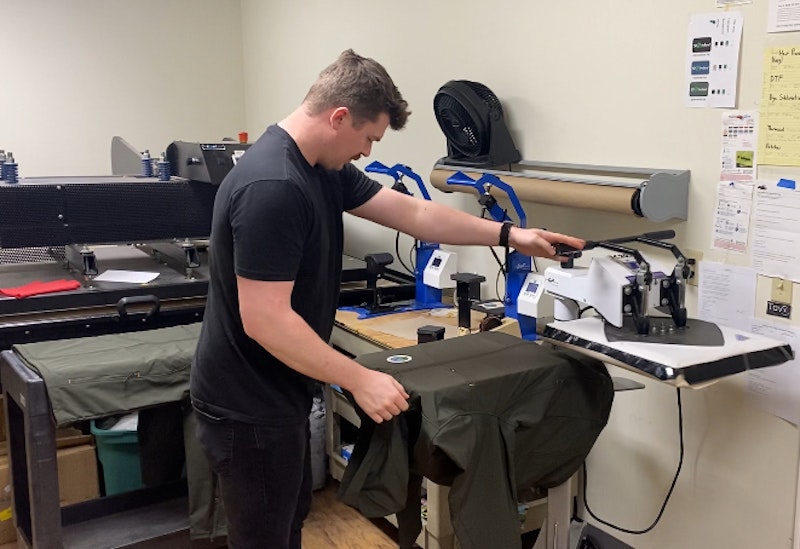
DTF is a modern heat-transfer process that works on almost any fabric — cotton, polyester, nylon, blends, and more. It’s especially effective for smaller runs and complex, full-color designs where screen setup costs would be prohibitive.
How It Works
- Print to film — The design is printed onto special clear PET film using water-based pigment inks.
- Adhesive application — While the ink is still wet, a hot-melt adhesive powder is applied to the back of the print.
- Cure — The film is heated to melt the powder into a flexible, glue-like backing.
- Heat press — The cured film is pressed onto the garment, permanently bonding the ink to the fabric fibers.
Key Advantages
- Fabric versatility — Works on cotton, polyester, nylon, treated leather, and blends where other methods may struggle.
- No color limits — As a digital process, it reproduces high-resolution photography and complex gradients without per-color screen setup costs.
- Soft, durable finish — Prints are thin and stretchy; they don’t crack easily and feel softer than traditional screen ink.
- Efficient for small runs — Ideal for on-demand or short-run orders where setting up screens for a multi-color design isn’t practical.
Ink That Becomes Part of the Fabric
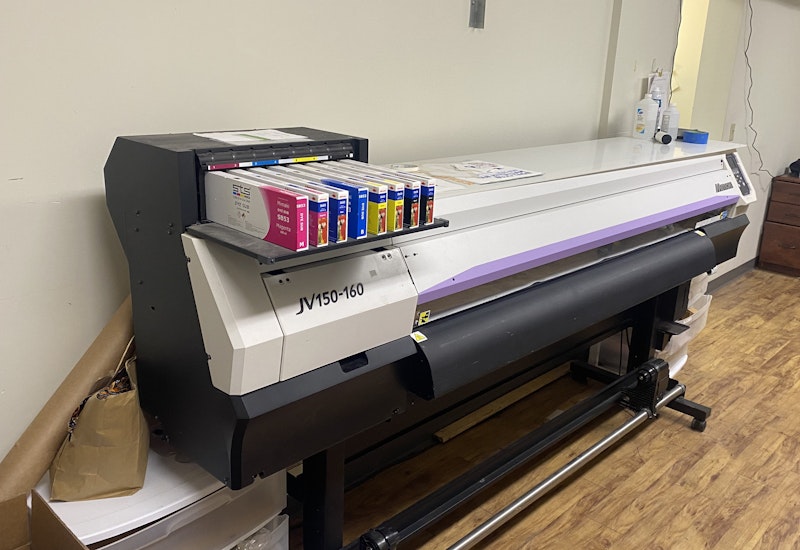
Sublimation uses heat to turn ink into a gas, which bonds with polyester fibers at a molecular level. Unlike methods where the design sits on top of the fabric, sublimation dyes the fibers themselves — producing the softest hand feel and most seamless finish of any print method.
How It Works
- Digital print — The design is printed onto special transfer paper using sublimation inks.
- Heat and pressure — The paper is placed on the garment and pressed at approximately 400°F.
- The bond — At that temperature, ink turns to gas and permeates the open fabric pores. As it cools, it becomes a permanent part of the material.
What to Know
- Polyester only — Sublimation bonds exclusively to polyester fibers and will not work on 100% cotton.
- Poly-count matters — The higher the polyester content, the more vibrant the result. A 50/50 blend produces a softer, more vintage appearance.
- White or light fabrics — Sublimation ink is transparent; the fabric’s base color shows through. Best results on white or very light garments.
The Premium Finish
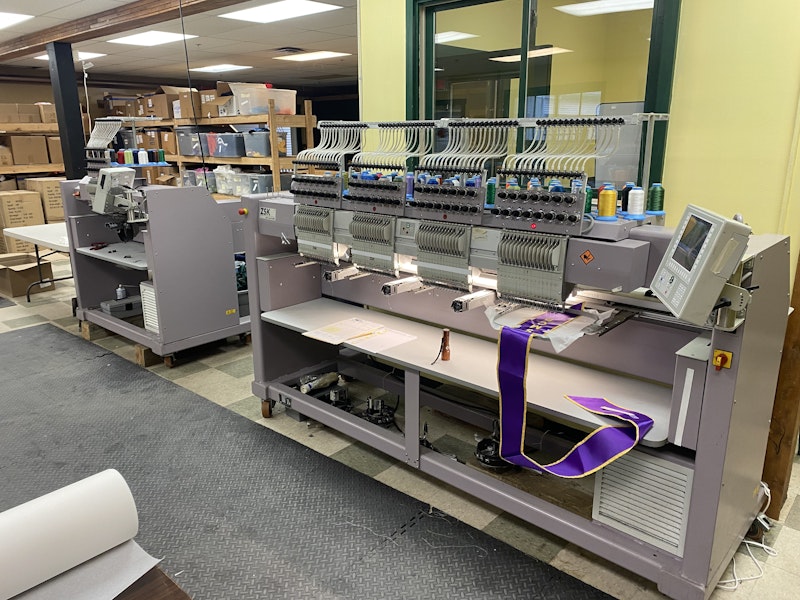
Embroidery is a three-dimensional construction process using needle and thread — not ink. High-speed industrial machines follow a digital stitch file to produce logos and text with physical depth, sheen, and a level of professionalism that printed methods don’t quite match.
The Process
- Digitizing — A specialist converts your artwork into a stitch file that maps every thread direction, placement, and color change. This step is what makes embroidery unique — you can’t simply “print” to an embroidery machine.
- Hooping — The garment is stretched in a rigid frame to keep the fabric drum-tight during stitching, preventing bunching.
- Stitch — The machine sews at high speed using multiple pre-loaded thread colors, building up the design layer by layer.
Why Choose Embroidery
- Professional standard — The default choice for corporate wear, polos, and outerwear; conveys established authority that a printed tee often doesn’t.
- Works on textured fabrics — The best option for fleece, beanies, and heavy jackets where ink can get lost in the pile or peel over time.
- Extreme durability — Thread outlasts the garment and withstands industrial laundering and high heat better than any ink-based method.
- Real dimension — The physical thread has texture and catches light, giving logos depth that a flat print can’t replicate.
Not Sure Which Method Is Right for You?
We’ll help you choose. Call or email for a free quote and a recommendation based on your fabric, quantity, and design.
Get a Quote